


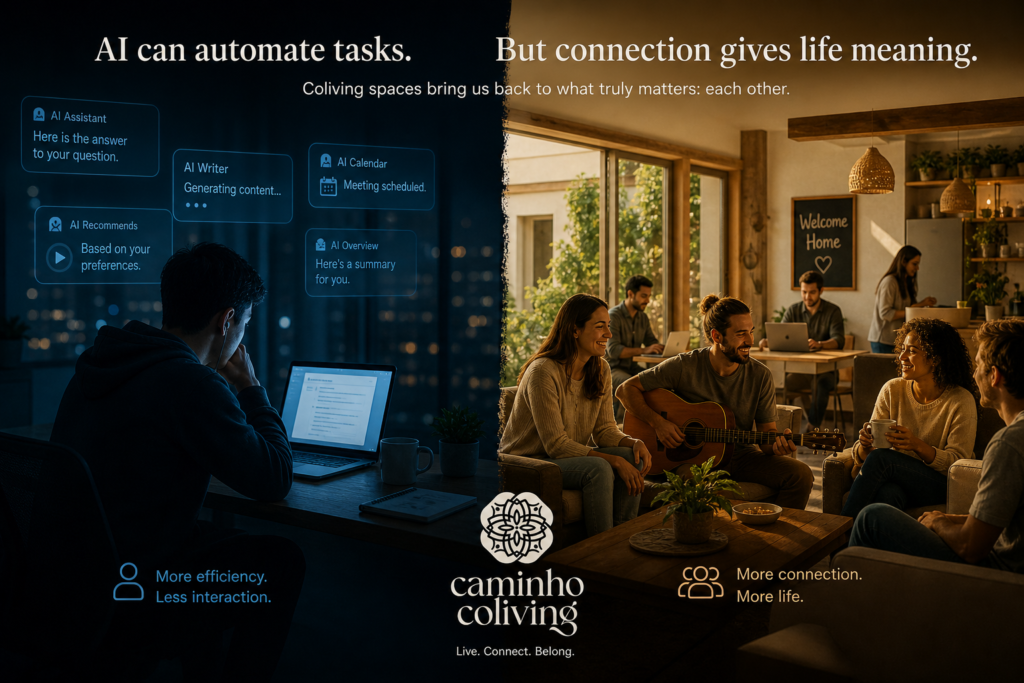
In recent years, artificial intelligence has rapidly integrated into our daily lives. From personalized recommendations and virtual assistants to AI-generated content and automated workflows, these tools promise efficiency, convenience, and even companionship. Yet, beneath these benefits lies a quieter, more complex consequence: a growing sense of solitude.
The Subtle Rise of Solitude in the Age of AI
AI doesn’t isolate people in the traditional sense. Instead, it gradually replaces small, meaningful human interactions. Tasks that once required conversation, asking for directions, collaborating on ideas, or even casual social exchanges, are now handled by algorithms. Over time, these micro-interactions disappear, and with them, opportunities for connection.
Additionally, AI systems are designed to personalize experiences. While this can be helpful, it can also create echo chambers where individuals engage primarily with content that mirrors their own preferences. This reduces exposure to diverse perspectives and limits spontaneous social interactions.
Remote work, powered by AI tools, has further contributed to this shift. While it offers flexibility, it often removes the social fabric of the workplace, informal chats, shared lunches, and the sense of belonging that comes from physical presence.
The Illusion of Digital Companionship
AI chatbots and virtual companions can simulate conversation, but they lack genuine emotional reciprocity. While they may temporarily ease feelings of loneliness, they do not replace the depth and unpredictability of human relationships. In some cases, reliance on AI for interaction may even reduce motivation to seek real-world connections.
This creates a paradox: the more connected we are through technology, the more isolated we may feel.
Why Human Connection Still Matters
Humans are inherently social beings. Psychological research consistently shows that strong social ties are essential for mental health, resilience, and overall well-being. Casual interactions, greetings, shared experiences, and community engagement, play a crucial role in maintaining this balance.
Without these, feelings of loneliness can intensify, even in a hyper-connected digital world.
Coliving as a Response to Modern Isolation
Coliving spaces are emerging as a powerful antidote to this growing solitude. Designed around shared living environments, they intentionally foster community, collaboration, and connection.
Unlike traditional housing, coliving emphasizes:
- Shared spaces that encourage interaction (kitchens, lounges, coworking areas)
- Community events that bring residents together
- Intentional design that balances privacy with social engagement
These environments create opportunities for organic human connection—something AI cannot replicate.
Reintroducing Everyday Social Interaction
In a coliving setting, social interaction becomes part of daily life again. Cooking together, working side by side, or simply sharing a conversation in a common area helps rebuild the social rhythms that many people have lost.
This is especially important for remote workers and digital nomads, who may otherwise spend long periods in isolation despite being digitally connected.
A Complement, Not a Rejection of AI
Coliving doesn’t reject AI, it complements it. Residents still benefit from the efficiency and flexibility that AI tools provide, but within a framework that prioritizes human connection.
This balance is key. Instead of allowing technology to replace social interaction, coliving integrates it into a lifestyle where technology supports, rather than substitutes, community.
Looking Forward
As AI continues to evolve, its impact on social behavior will deepen. The challenge is not to resist technological progress, but to design environments that preserve what makes us human.
Coliving offers a glimpse into that future: a model where innovation and connection coexist. By intentionally creating spaces for interaction, it helps counteract the unintended isolation of the digital age.
A Real-World Example: Caminho Coliving
One example of this approach in action is Caminho Coliving. Located in Portugal, Caminho Coliving combines comfortable shared living with a strong focus on community, wellbeing, and meaningful human connection.
Residents are encouraged to engage through shared meals, group activities, and collaborative work environments, creating a natural balance between productivity and social life. For remote workers, entrepreneurs, and travelers, it offers not just a place to stay, but a sense of belonging—something increasingly rare in an AI-driven world.
In a time when technology can unintentionally distance us, spaces like Caminho Coliving remind us that connection still matters—and that it can be intentionally designed into how we live.